Trends
Sober Curious in Korea: Making Room for a Different Kind of Night Out
AT A GLANCE
- What
- Not quitting, but choosing whether to drink each time
- Bar visits
- Gen-pop bar visits by people in their 20s in H1 2026 were 48% of H1 2023 (NH Nonghyup Bank analysis)
- Non-alcoholic drinks
- 77.4% have tried, 33.3% in the past month (Opensurvey, ages 20–39)
- Reasons to drink less
- Health 28.6%, financial burden 27.9%
“I’m not drinking tonight” should be a complete sentence. Whether it feels that easy still depends on the people around the table, but the idea is a night out where everyone can choose their own drink without making an announcement.
That is the core of sober curious: paying attention to when and why you drink, and allowing yourself to choose differently. It can mean an alcohol-free evening, fewer drinking occasions, or a longer break.
Bar visits are shrinking
NH Nonghyup Bank analyzed personal card payments and found general bar visits in the first half of 2026 were down 34% from the first half of 2023, with spending down 30%. Setting H1 2023 at 100, people in their 20s fell to 48, 30s to 65, 40s to 60 and 50s to 76, while those 60 and over rose to 109. Late-night visits after 11 pm fell more than early-evening ones, which reads as fewer second and third rounds. Wikitree report (in Korean).
The same report says use of gyms and swimming facilities rose sharply, with a 59% increase cited.
What the latest survey actually says
Opensurvey’s MZ Generation Alcoholic Beverage Trend Report 2026, published September 7, describes younger adults cutting back on drinking frequency and quantity. Health (28.6%) and financial burden (27.9%) were the leading reasons. Its summary reports that 77.4% had tried non-alcoholic drinks and 33.3% had consumed them in the previous month. Those measure different things: ever trying a drink is not the same as drinking it recently. Opensurvey’s report summary.
The study surveyed 2,000 people aged 20–39 across Korea on August 20–23, including 1,000 who had consumed alcohol in the preceding month; some analysis also used food-diary data. These findings describe the study’s younger-adult audience, not every Korean person or every social setting. Survey scope and dates.
That is enough to make the conversation interesting without declaring that pressure to drink has disappeared.
Keep the gathering, change the default
My reading is that the most useful shift would be in how we arrange the evening. Start with a meal, a place to talk, or an activity everyone wants to do. Then let drinks fit around that plan.
A second round does not have to be another bar. It could be tea, dessert, a walk, or simply the end of a good evening. None of those choices needs to become a statement about anyone else’s habits.
If you are the person booking, a quick look at the drinks menu helps. Having an appealing option already available is much friendlier than asking someone to explain their choice after everyone has ordered.
A phrase you can actually use
“오늘은 술 안 마실게요” (oneureun sul an masilgeyo) means “I won’t be drinking today.” If you want to suggest the next stop, try “카페 갈까요?” — “Shall we go to a cafe?”
You can keep the explanation as short as you like. Equally, if a friend says they are skipping alcohol, accept the answer and carry on with the conversation.
When choosing a drink, read the label or ask what is in it rather than relying on its name. A mocktail, a lighter beer and a canned highball are not interchangeable categories. If you want no alcohol, make that preference explicit when ordering.
The goal is a table where different choices feel ordinary: one person with beer, another with sparkling water, another with tea, all there for the same conversation.
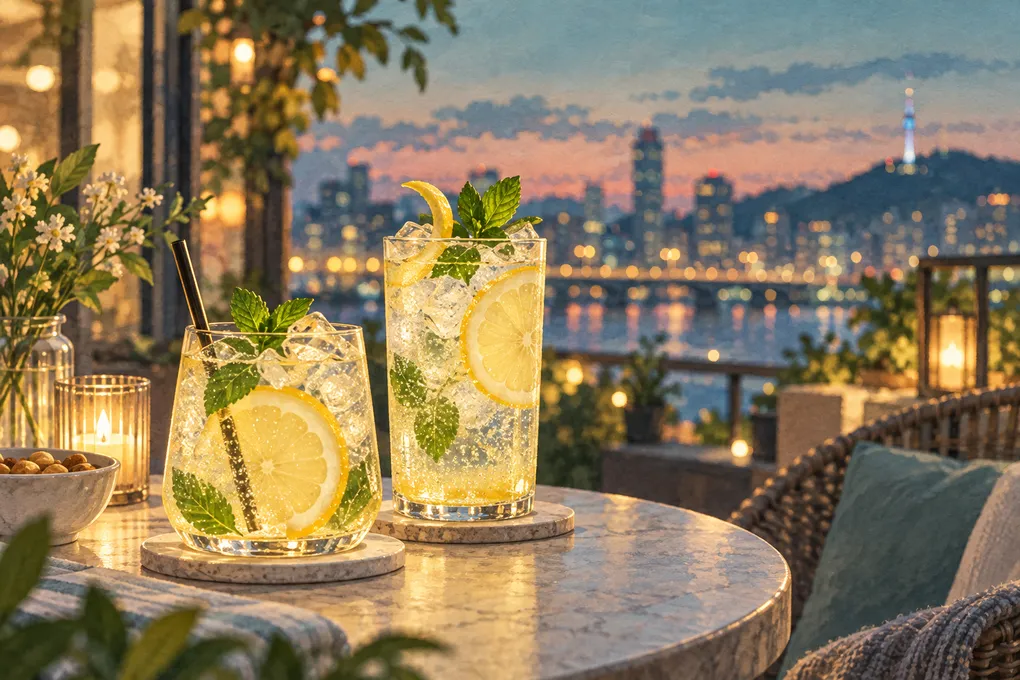
Hero image: AI-generated citrus mocktail illustration.